
FLOORING GUIDES
Light and Natural Oak Flooring: Choosing a Finish
Compare Natural Oak, Washed Sand and Satin Greige beside your cabinetry and wall samples. Once you choose a colour, check plank and herringbone sizes and carton coverage.
Updated 15 November 2026

Start with the colour you want to live with
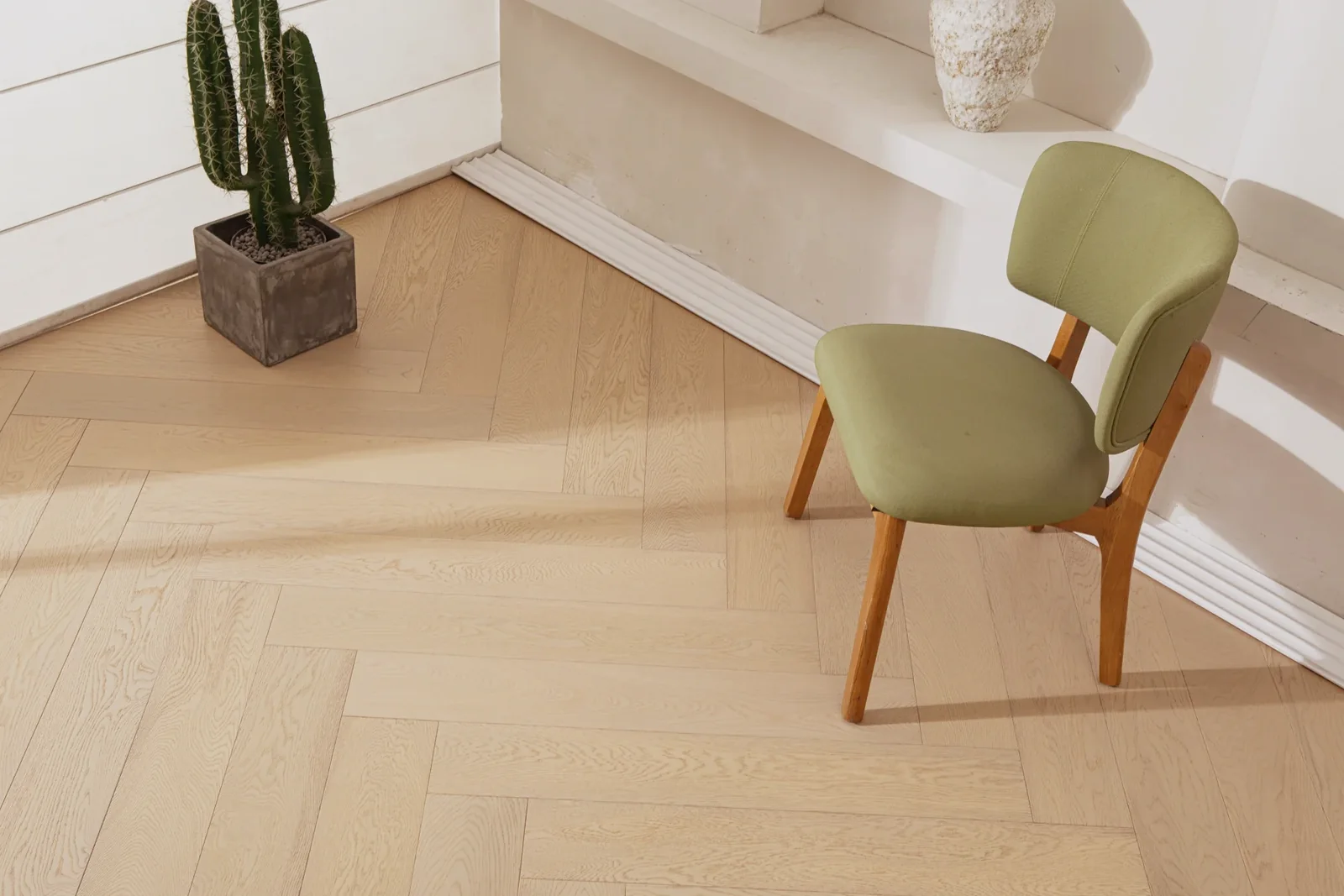
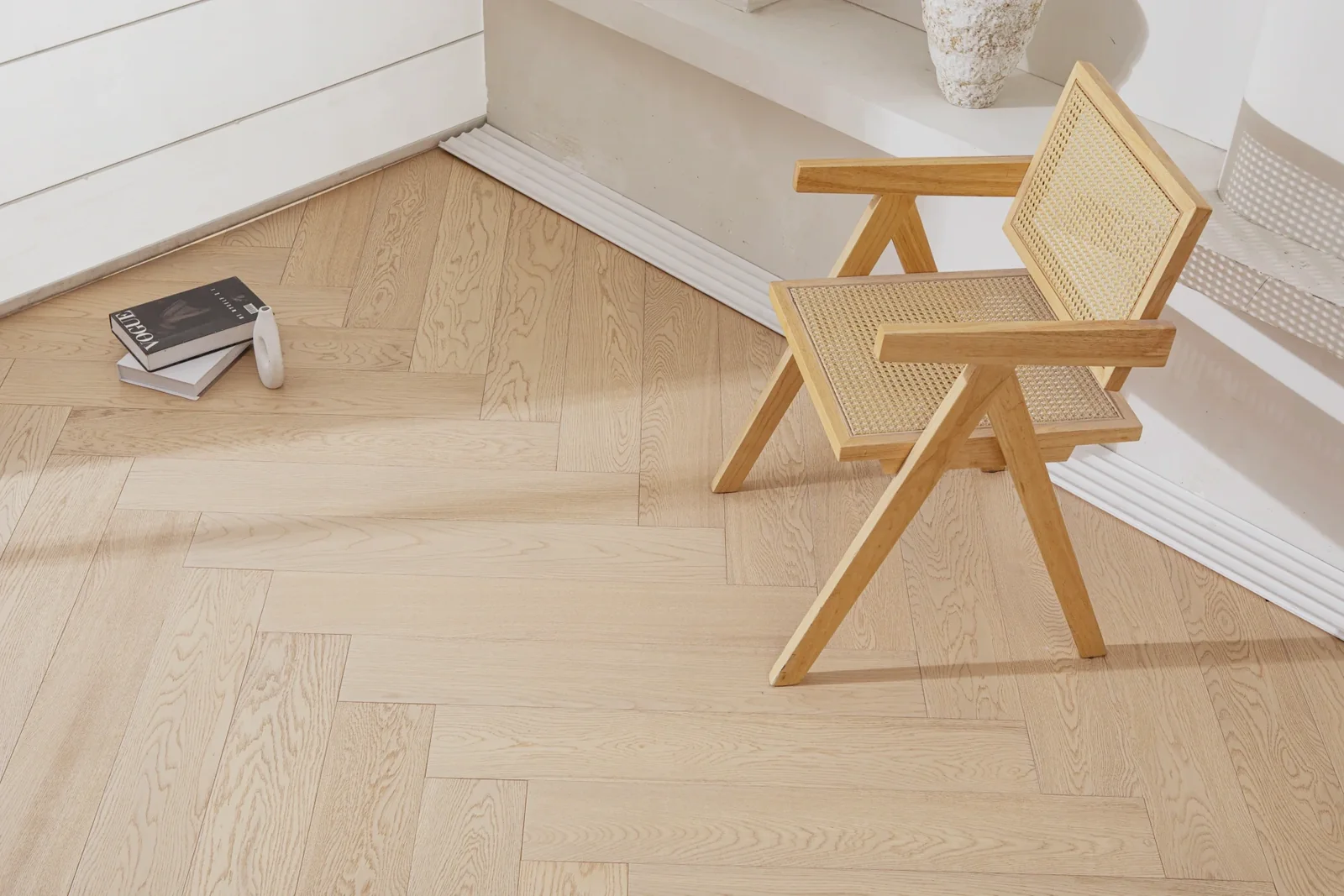
Light oak flooring can mean a warm natural timber, a pale washed finish or a quieter grey-beige tone. Those choices can look quite different beside white walls, stone or timber cabinetry. Start with the surrounding materials and the mood you want, then shortlist named finishes that you can compare on physical samples.
Within Bestwork’s engineered oak collection, Natural Oak, Washed Sand and Satin Greige offer three starting points. They are supplied with a matte factory finish in both straight plank and herringbone formats. “Natural Oak” is the name of a finished product in this collection; it does not mean raw or unfinished timber.
Compare three oak finishes
| Finish | Visual starting point | Compare it beside | Product details |
|---|---|---|---|
| Natural Oak | Natural oak colour with visible grain | Warm whites, timber cabinetry and stone samples | Straight planks · Herringbone |
| Washed Sand | A lighter, washed appearance | Pale walls, light cabinetry and warmer accents | Straight planks · Herringbone |
| Satin Greige | Muted grey and beige tones | Grey stone, neutral cabinetry and the room’s warm materials | Straight planks · Herringbone |
These are comparison prompts, rather than a promise that a finish will suit every combination. Natural timber varies between boards, while the light, camera exposure and screen settings affect how a photograph appears. Ask to see the range of colour and grain represented by the product, rather than making a decision from one small patch.
Looking for a golden or honey-toned oak floor?
Use two boards of the same format for the first comparison. Place Natural Oak long plank beside Latte Tan long plank, with the long edges running the same way. Natural Oak is a starting point for a natural grain colour. Latte Tan gives you a warmer comparison. If both are too warm beside the cabinet door, add Washed Sand to the shortlist.
For herringbone, put one pair of Natural Oak blocks beside one pair of Latte Tan blocks. Turn both pairs together under the same light. Comparing like layouts helps you see whether the change you like comes from the colour or the direction of the grain.
To compare a physical board in Melbourne’s east, ask Victoria Hardwood which oak samples are available in Glen Waverley. Once you have picked a finish, request pricing for Natural Oak plank or Latte Tan herringbone and include the floor area and postcode.
Compare samples in the project’s light
Place the shortlisted samples beside the actual wall, cabinetry, benchtop and tile samples. View them together in daylight and under the lighting planned for the room. If adjoining rooms receive different light, compare there too. Keep the samples together so that you are judging them under similar conditions.
Look at both the overall tone and the grain. A floor occupies much more of a room than a handheld sample, so use the product photographs to consider the broader impression after checking the sample itself. Record the finish name and product code with any reference photographs you send to your retailer or supplier.
Choose the board format as well as the colour
Compare colour on samples of the same format first. Next, place two straight planks side by side, then arrange herringbone samples in a V. The straight planks carry the grain along the room. With herringbone, adjacent boards turn the grain in different directions and can catch the same light differently. See the herringbone size guide for more on pattern scale.
Natural Oak straight plank and herringbone specifications
Both Natural Oak formats are 15 mm thick, including a 4 mm European oak surface. If you have chosen the colour, use the product code and carton coverage for the layout you plan to order.
| Natural Oak format | Board size | Boards per carton | Area per carton |
|---|---|---|---|
| Straight plank (NO190) | 1900 × 190 × 15 mm | 6 | 2.166 m² |
| Herringbone (NO190-BL) | 900 × 150 × 15 mm | 14 | 1.89 m² |
For a 20 m² floor, 10 straight-plank cartons supply 21.66 m². In herringbone, 11 cartons supply 20.79 m². These figures round the floor area up to whole cartons before any allowance for cuts. Ask your installer to confirm that allowance for your room and recalculate the order from the adjusted area.
Separate colour, construction and supplied finish
A colour name does not specify the board construction. Check the thickness, wear layer, profile and supplied finish on the exact product page. Our European oak flooring guide explains those choices, and the solid versus engineered comparison helps you compare the two constructions.
If you want a colour developed through a site-applied finish, discuss that brief with a flooring professional and review the unfinished oak guide. The raw solid range is a separate product choice from these three factory-finished engineered colours.
Compare samples in your room
Shortlist the finish names, choose straight planks or herringbone, and include the approximate floor area, project location and timing. Ask us about physical samples and availability, or send your postcode for a delivered price. Ask your installer to confirm site suitability and the cutting allowance for the chosen layout.
Explore all five engineered oak finishes or ask about flooring samples. If supply and installation are quoted separately, use the flooring cost and quote guide to compare what each quotation includes.
Choosing between pale Australian timber and a European oak finish? Compare Blackbutt and Tasmanian Oak samples with Natural Oak and Washed Sand beside your actual joinery.