
FLOORING GUIDES
Solid vs Engineered Oak Flooring: What to Compare
Solid oak is timber throughout; engineered oak combines a real oak surface with a layered core. Compare Bestwork’s raw 18 mm parquetry with matte 15/4 mm boards, then check site work and total quote scope.
Updated 13 November 2026
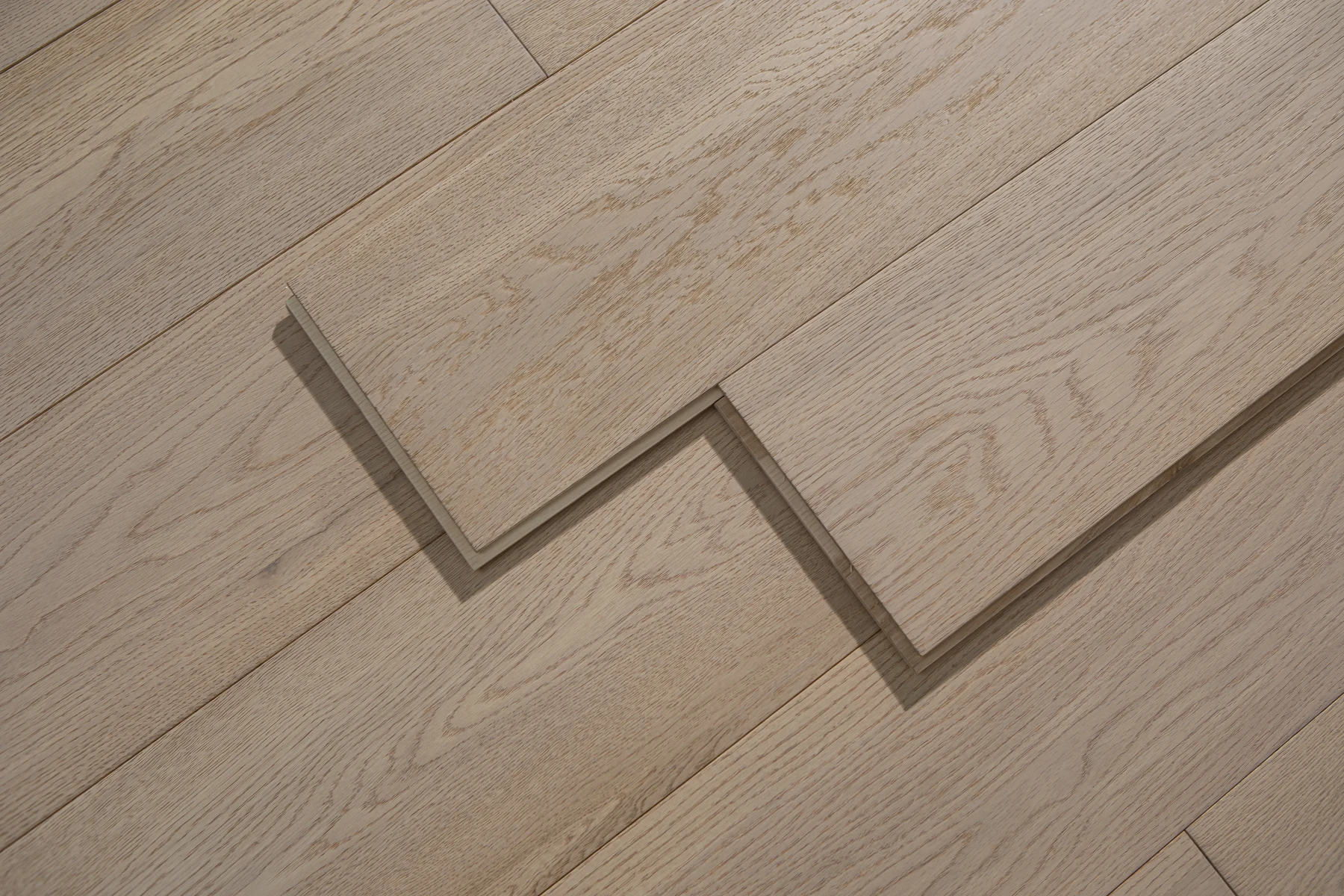
If you put a solid oak sample beside an engineered oak sample, both can show real oak grain. The difference becomes clearer when you turn the boards over and look at the edges.
Solid oak is made from one piece of timber. Engineered oak has an oak surface bonded to a layered core. That tells you how the board is built; it does not settle every question about the finished floor. The coating, board size, installation plan and conditions in the room still need a closer look.
Solid vs engineered oak at a glance
This table compares Bestwork’s current ranges, rather than every solid or engineered product on the market. Read the exact product specification alongside a physical sample.
| What to compare | Solid oak at Bestwork | Engineered oak at Bestwork |
|---|---|---|
| Construction | Solid European oak throughout | European oak surface over a multi-layer eucalyptus hardwood core |
| Thickness | 18 mm overall | 15 mm overall, including a 4 mm oak wear layer |
| Supplied finish | Raw and unstained; agree a site-finishing plan | Five matte factory finishes; compare the named colour samples |
| Available layouts | Herringbone and chevron | Straight plank and herringbone |
| Before ordering | Confirm site suitability, installation and finishing scope | Confirm site suitability, installation and the selected factory finish |
What is inside the board?
Our solid oak range is supplied raw and unstained, in 18 mm thick herringbone and chevron boards.
Our engineered oak range has a European oak surface over a multi-layer eucalyptus hardwood core. The boards are 15 mm thick overall, including a 4 mm oak wear layer. You will see that written as 15/4 mm in the specifications.
The timber you see and touch is oak in both cases. For engineered flooring, ask what the surface and core are made from, rather than judging the construction by the word “engineered” alone. The National Wood Flooring Association’s overview of wood floor types gives a useful explanation of solid and layered constructions.
Raw oak or a finish already chosen?
This is one of the more practical differences when comparing our ranges.
With raw solid oak, the final colour and coating are part of the site finishing plan. Take that conversation to your installer or finishing contractor early. Ask to see a coating sample on the timber, agree on the sheen, and find out how the work fits around the rest of the project.
Our engineered boards are offered in five matte factory finishes: Burnished Java, Latte Tan, Natural Oak, Satin Greige and Washed Sand. Each finish is shown in straight planks and engineered herringbone.
Compare physical samples beside your cabinetry and wall colours. A finish name or a room photo will not show all the variation in timber. If you are matching an existing floor, bring a sample or clear photos when you enquire.
For the finishing brief, read our unfinished oak flooring guide. For finished colour options, compare Natural Oak, Washed Sand and Satin Greige. Natural Oak is a named factory finish in the engineered range, rather than another name for raw timber.
The formats in our current range
| Format | Construction | Board size | Supplied finish |
|---|---|---|---|
| Straight plank | Engineered oak | 1900 × 190 × 15/4 mm | Five matte factory finishes |
| Engineered herringbone | Engineered oak | 900 × 150 × 15/4 mm | Five matte factory finishes |
| Herringbone 610 | Solid oak | 610 × 125 × 18 mm | Raw / unstained |
| Herringbone 450 | Solid oak | 450 × 90 × 18 mm | Raw / unstained |
| Chevron 590 | Solid oak | 590 × 125 × 18 mm | Raw / unstained |
| Chevron 850 | Solid oak | 850 × 95 × 18 mm | Raw / unstained |
These are the formats listed on our website. Confirm the specification and availability for the boards you want before ordering.
Construction and pattern are separate choices. Herringbone is available in both our solid and engineered ranges; our current chevron range is solid oak. If the pattern is still undecided, our Herringbone vs Chevron guide shows the difference in the joints and layout.
For closer product details, compare the solid herringbone sizes and solid chevron sizes.
How to write an engineered oak flooring specification
If a quote says only “Natural Oak, 15 mm”, two different Bestwork boards fit that description. Start with the product code and pattern. Then record the ordered dimensions, wear layer, finish and pack coverage. Here is what that looks like for the same colour in our two formats.
| Item to specify | Natural Oak straight plank | Natural Oak herringbone |
|---|---|---|
| Product code | NO190 straight plank | NO190-BL herringbone |
| Board format | 1900 × 190 mm nominal plank | 900 × 150 mm herringbone |
| Total thickness and surface | 15 mm including 4 mm European oak | 15 mm including 4 mm European oak |
| Finish | Natural Oak, matte | Natural Oak, matte |
| Coverage per carton | 2.166 m² | 1.89 m² |
For example, if you prefer the second board, you could write “Natural Oak NO190-BL, engineered herringbone, 900 × 150 × 15 mm, 4 mm European oak surface, matte finish”. Add the order area agreed with the installer and the delivery postcode. The same colour in straight plank comes in a different pack size, so use the selected product’s coverage when converting square metres to cartons.
Start the installation conversation before ordering
A sample cannot tell you whether a product suits the site. Give your installer the board specification and the floor plan while there is still time to make changes.
Work through the subfloor condition, moisture checks, fixing method and floor height. The difference between a 15 mm and an 18 mm board may matter at a doorway, a stair or a junction with tiles. Allow for the whole installation build-up when checking levels.
If there is underfloor heating, confirm compatibility and the required installation and operating conditions for the exact product in writing. The construction name by itself is not enough to make that decision.
The same applies to areas where water is likely to reach the floor. Engineered oak still has a timber surface. Check the intended use with the supplier and installer instead of treating it as waterproof.
What about sanding later?
The 4 mm wear layer on an engineered board is different from its 15 mm total thickness. Likewise, an 18 mm solid board specification does not tell you how much material a contractor can safely remove from an installed floor.
We would not promise a fixed number of sandings from either figure. The remaining surface, the condition and flatness of the floor, and the work required all matter. Have a qualified timber flooring contractor assess the floor before planning a resand.
A worn coating may also call for different work from damage to the timber itself. The NWFA’s refinishing guide explains the distinction between a maintenance coat and a full sand and refinish.
Compare the whole job in the quote
A supply price is only part of the comparison. Ask for the costs of preparation, installation, trims and transitions alongside the boards. For raw solid oak, include the finishing work and the time it needs.
Use the same floor plan and scope when asking for quotes. Check the allowance for cuts, especially for a patterned layout, and make sure you know which parts of the work each quote covers. A lower board price does not always mean a lower total project cost.
Our timber flooring cost and quote guide sets out the items to compare, including carton quantities and delivery. Ask the supplier to quote the chosen product and order quantity, and ask the installer to identify the site work separately or clearly within a combined quote.
Which should you choose for your project?
If you want to choose an on-site colour and coating, start with the raw solid oak options and a finishing plan. If one of our five finishes already suits the room, compare the engineered formats and samples.
For herringbone, compare both constructions before deciding. For straight planks, the current Bestwork option is engineered oak; for chevron, it is raw solid oak. Then check that the chosen product and installation method fit the site. That is more useful than choosing on construction alone.
If you are comparing grade descriptions as well as construction, the European oak floorboards guide explains how to separate grade, finish and board format.
Ask us for a flooring quote with your preferred pattern or finish, approximate floor area, project location and timing. Tell us whether you need samples, specifications or a supply quote, and we can work through the options with you.
If colour and grain are the next decision, request physical samples of the selected options and compare them with the surrounding materials in the project’s light.